

Acute, recurring and persistent pain
A first episode after lifting may need different advice from pain that has recurred for years. Duration matters, but so do function, confidence, previous care and the activities that have been reduced.
Assessment and physiotherapy for back pain, with clear screening, practical activity advice and rehabilitation based on how symptoms affect your life.

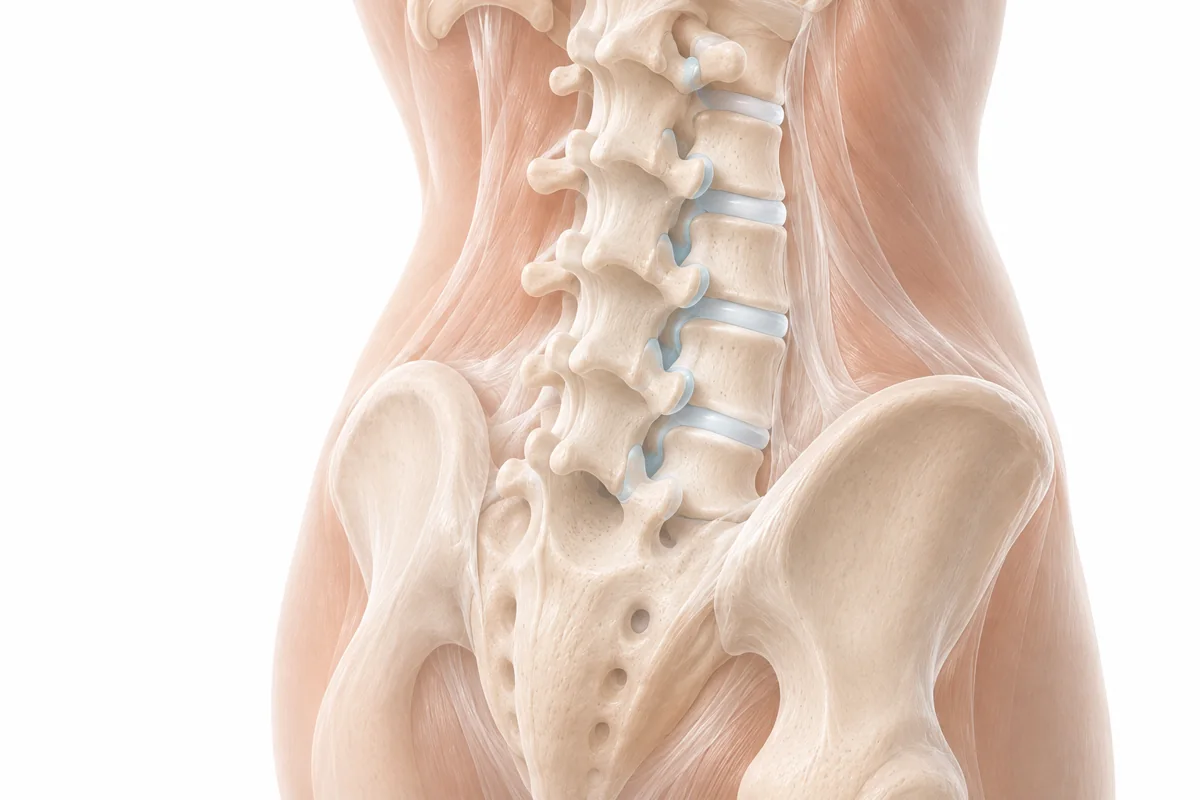
Drag to rotate through 360 degrees. With the model focused, use the arrow keys to rotate and Home to return to the overview. The highlighted area shows relevant anatomy, not a diagnosis or an individual scan.
Back pain can be local to the lower back, spread into the buttock or leg, or occur with altered sensation or weakness when a nerve is involved. It may begin after one movement, build with repeated work or training, or recur without a single clear incident.
A useful assessment does not depend on finding one structural fault in every case. It considers the symptom pattern, general health, previous episodes, sleep, work and activity demands, and the physical findings that are relevant to the person in front of the clinician.
A first episode after lifting may need different advice from pain that has recurred for years. Duration matters, but so do function, confidence, previous care and the activities that have been reduced.
Pain travelling into the leg may be referred from the back or related to nerve-root irritation. Distribution, sensation, strength and neurological findings help distinguish the presentation.
These patterns help explain what to look out for. They do not confirm a diagnosis on their own.
Pain may stay in the lower back or spread into the buttock. A sudden episode and recurring pain can need different starting plans.
Sitting, bending, lifting, walking or sleeping may become uncomfortable. The activities affected help guide assessment.
Pain, tingling or numbness extending into the leg needs a closer look at nerve function and other possible causes.
Pain can make normal movement feel difficult or worrying. Assessment helps establish a workable level of activity.
Australian clinical standards emphasise a targeted history and physical examination, screening for serious or specific causes, and a focused neurological examination when leg or nerve symptoms are present.
The physio will ask where pain is felt, how it changes with sitting, bending, lifting, walking or sleep, and which work, home or sporting activities are limited.
Assessment may include spinal and hip movement, relevant strength and functional tasks, plus reflexes, sensation, muscle strength or nerve-tension tests when indicated.
Previous episodes, current stress, sleep, concerns about movement, work demands and general health can influence the plan and should not be reduced to a scan finding.
New bladder or bowel difficulty, numbness around the saddle area, rapidly progressing leg weakness, major trauma or serious systemic symptoms require urgent medical assessment.
When serious pathology is unlikely, management commonly focuses on clear information, maintaining or restoring activity and a progressive plan for the tasks that matter. Passive treatment should not accumulate when it is not helping.
With persistent pain, the nervous system can become more responsive and normal movement may feel threatening or painful without indicating new tissue damage each time. This does not mean the symptoms are imagined. It means rehabilitation may also need graded exposure, confidence and pacing alongside physical capacity.
The starting point may be walking, changing position, modifying aggravating tasks and identifying movements that can be performed with acceptable symptoms.
Exercise can be selected for the person’s current ability, then progressed toward lifting, work, gym, running or sport rather than prescribed as a generic back routine.
Manual therapy may be considered when it supports short-term movement or symptom goals, but it should remain connected with active rehabilitation and review.
Persisting or worsening pain, new neurological findings or poor functional progress should trigger reassessment and, where appropriate, medical or multidisciplinary referral.
A physiotherapy appointment can assess the current episode, screen for features requiring another pathway and develop a plan for daily activity, work, exercise or sport. Bring relevant medical information or scans if you have them, but imaging is not automatically required for every presentation.
Book online or call
08 6183 1790
Practical answers about symptoms, assessment and recovery.
Not in most uncomplicated presentations. Imaging is considered when the history or examination suggests a serious or specific cause, when neurological findings require investigation, or when the result is likely to change management.
Prolonged bed rest is generally not the goal. Activity may need temporary modification, but the plan usually aims to keep or restore tolerable movement and normal tasks progressively.
No. Leg pain may be referred from the back or involve a nerve root, and other conditions can also produce leg symptoms. Assessment of distribution, sensation, strength and neurological signs helps clarify the pattern.
Seek urgent medical care for new bladder or bowel changes, saddle-area numbness, rapidly progressing weakness, severe symptoms after major trauma, or concerning systemic illness. Otherwise, book a physiotherapy assessment when pain or function is not improving or the correct next step is unclear.
Book online or call our Cottesloe team.
General educational information; your assessment determines the appropriate care. Supporting reference: NHS back and nerve information.
3D bone and tissue source: BodyParts3D, © The Database Center for Life Science, CC BY-SA 2.1 Japan. Meshes cropped and simplified, with illustrative highlights and some simplified soft tissues. Supporting artwork is illustrative and does not represent a scan or confirm a diagnosis. Attribution and licence.