

Local neck and shoulder-blade pain
Movement restriction, muscle sensitivity and pain with sustained or repeated positions may affect turning, looking up, desk work, driving or training.
Physiotherapy assessment for neck pain and neck-related headache, including movement, neurological screening and rehabilitation for daily or sporting demands.

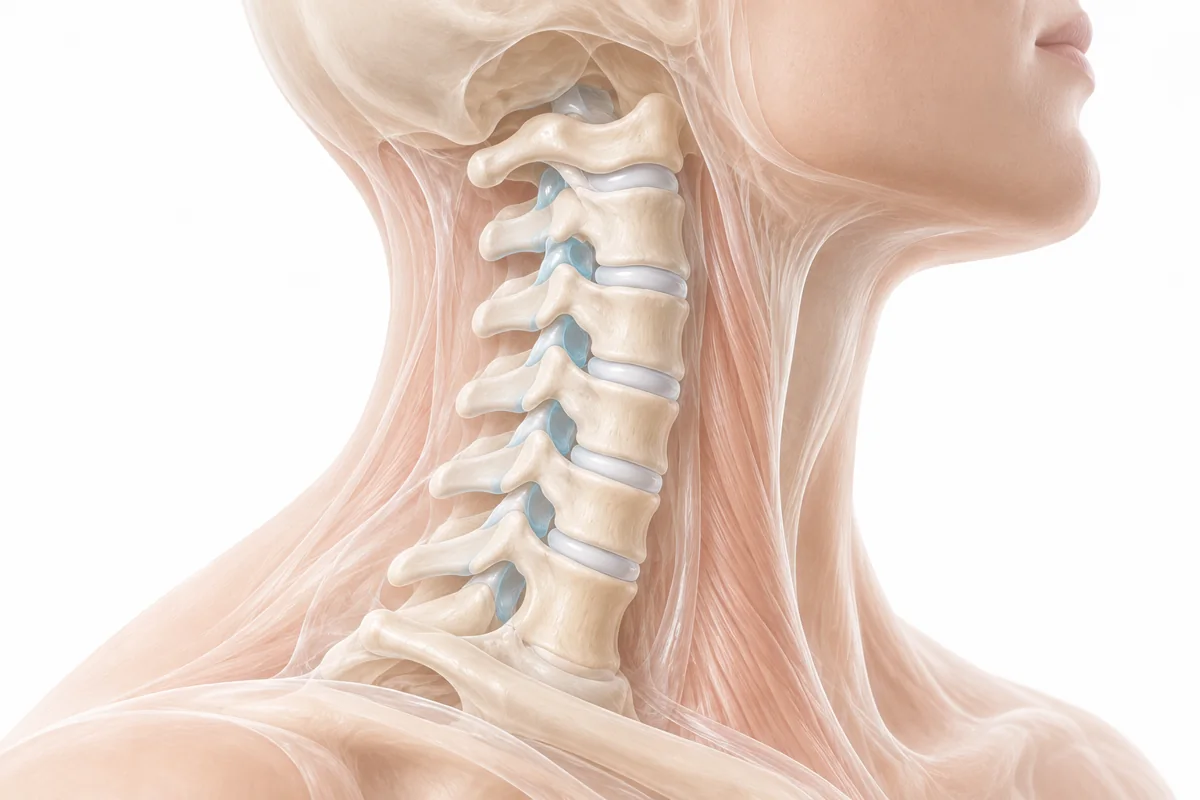
Drag to rotate through 360 degrees. With the model focused, use the arrow keys to rotate and Home to return to the overview. The highlighted area shows relevant anatomy, not a diagnosis or an individual scan.
Neck pain may remain local, spread toward the shoulder blade or arm, or occur with headache. Symptoms can follow trauma, build with sustained work or training positions, or recur during lifting, contact sport, driving and sleep.
A cervicogenic headache is a headache associated with a neck disorder, but not every headache comes from the neck. Headache pattern, associated symptoms and relevant medical history need to be considered before treatment is directed at the cervical spine.
Movement restriction, muscle sensitivity and pain with sustained or repeated positions may affect turning, looking up, desk work, driving or training.
Pain, pins and needles, numbness or weakness into the arm require a neurological examination and may need medical review depending on the findings.
These patterns help explain what to look out for. They do not confirm a diagnosis on their own.
Turning your head, looking up or holding one position may become uncomfortable or restricted.
Pain may spread toward the shoulder blade or arm. Tingling, numbness or weakness needs appropriate nerve screening.
Some headaches are related to the neck, but migraine and other causes need consideration before choosing treatment.
Driving, desk work, lifting and sleep can be affected. These tasks help define what rehabilitation needs to restore.
Assessment distinguishes the movement and load-related presentation from symptoms that require medical investigation. It also checks whether the headache pattern is plausibly related to the neck rather than assuming the source.
The physio will ask about onset, location, frequency, trauma, aggravating movements, headache behaviour and any visual, balance, neurological or systemic symptoms.
Cervical and shoulder movement, relevant joint and muscle findings, and the effect of sustained or repeated positions can be examined.
Strength, sensation, reflexes and nerve-related tests may be used when symptoms extend into the shoulder, arm or hand.
A sudden severe new headache, headache after significant trauma, fever or marked illness, new neurological symptoms or other concerning change requires prompt medical assessment.
Treatment is selected from the clinical pattern. It may combine advice, movement, specific exercise and hands-on treatment, with progress judged by function rather than temporary symptom change alone.
Workstation, driving, sleep and training positions can be adjusted without trying to enforce one perfect posture throughout the day.
Exercise may address cervical movement, deep neck and shoulder-girdle muscle function, or upper-limb strength according to the assessment.
Mobilisation, manipulation or soft-tissue treatment may have a short-term role when clinically appropriate and should remain linked with active care.
For sport or physical work, rehabilitation may need to include lifting, overhead tasks, running, contact preparation or repeated head movement.
An appointment can establish the symptom pattern, examine movement and neurological function where needed, and decide whether physiotherapy care or another medical pathway is appropriate.
Book online or call
08 6183 1790
Practical answers about symptoms, assessment and recovery.
A neck disorder can be associated with cervicogenic headache, but headache has many possible causes. The history and examination should support a neck-related pattern before treatment is directed at it.
It can include the symptom and headache history, neck and shoulder movement, relevant strength and joint tests, and neurological screening when arm symptoms, numbness or weakness are present.
No. Sustained positions may influence symptoms, but pain can also relate to trauma, repeated load, reduced capacity, sleep, stress and other clinical factors. The aim is to identify the relevant contributors rather than prescribe one rigid posture.
Seek prompt medical care for a sudden severe new headache, headache after major trauma, fever or serious illness, or headache with new weakness, speech, vision, balance or other neurological changes.
Book online or call our Cottesloe team.
General educational information; your assessment determines the appropriate care. Supporting reference: NHS neck pain information.
3D bone and tissue source: BodyParts3D, © The Database Center for Life Science, CC BY-SA 2.1 Japan. Meshes cropped and simplified, with illustrative highlights and some simplified soft tissues. Supporting artwork is illustrative and does not represent a scan or confirm a diagnosis. Attribution and licence.