

Diffuse inner-shin pain
Medial tibial stress syndrome usually produces tenderness over a longer section of the posteromedial tibia rather than one small, sharply localised spot.
Assessment for exercise-related shin pain, with screening for bone stress injury and a staged return to running or field sport.

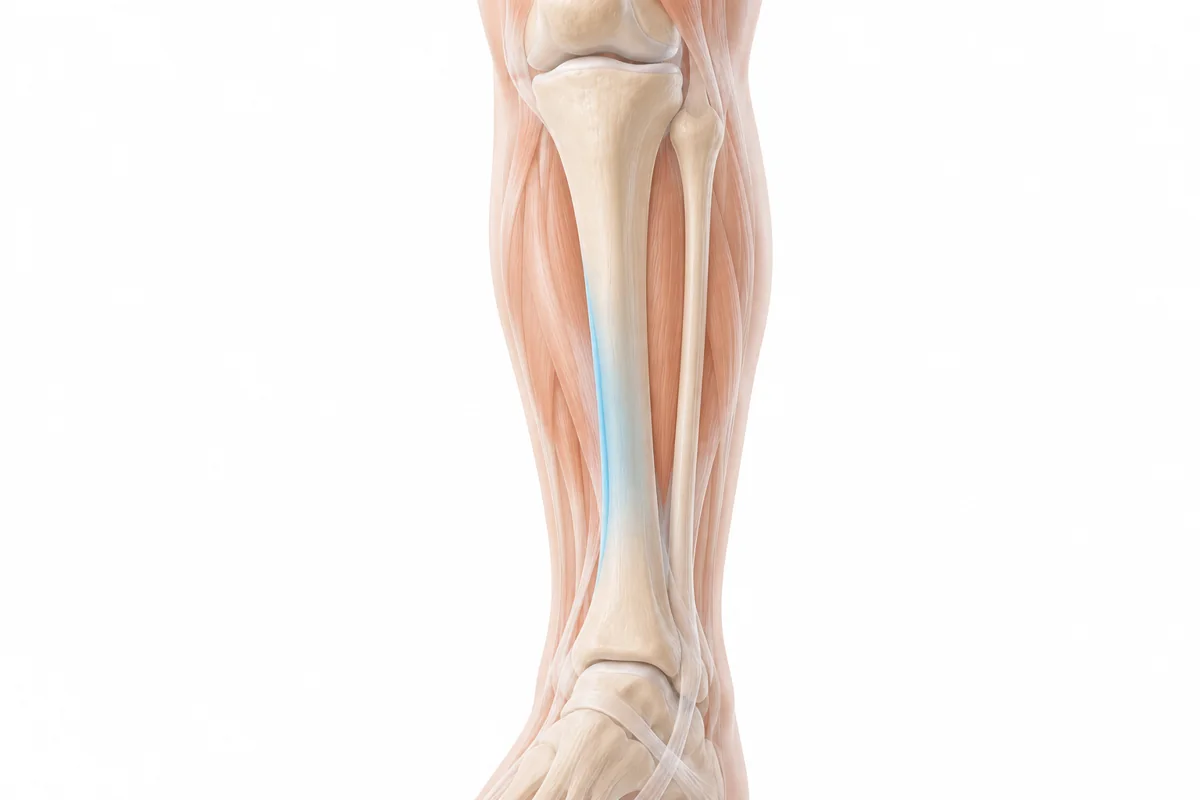
Drag to rotate through 360 degrees. With the model focused, use the arrow keys to rotate and Home to return to the overview. The highlighted area shows relevant anatomy, not a diagnosis or an individual scan.
Shin splints commonly refers to medial tibial stress syndrome, an exercise-related pain along the inner border of the shin. It often develops after a change in running, jumping, surface, footwear or training frequency.
A focal tibial bone stress injury can initially feel similar but requires more protective management. Pain location, tenderness length, impact tolerance and symptoms at rest help determine whether further medical investigation is needed.
Medial tibial stress syndrome usually produces tenderness over a longer section of the posteromedial tibia rather than one small, sharply localised spot.
Pain may appear early in a run, settle as the athlete warms up, then return with greater intensity or after the session as the condition becomes more irritable.
Focal tenderness, pain with walking or hopping, night or rest pain and rapid worsening after a training increase raise concern for a stress reaction or fracture.
These patterns help explain what to look out for. They do not confirm a diagnosis on their own.
Medial tibial stress syndrome commonly causes a broader painful strip along the inner tibial border.
Impact may provoke symptoms, particularly after a change in training volume, intensity or surface.
Where tenderness occurs and how much of the bone is sore help guide assessment.
A small sharply tender area, pain at rest or worsening impact pain needs review for possible bone stress injury.
The examination maps the painful area and tests impact tolerance before deciding whether a running progression or a medical bone-stress pathway is appropriate.
Distance, intensity, hills, surfaces, sport sessions and recovery are compared with symptom onset. Returning after a break can matter even if the current weekly total looks familiar.
The length and exact location of bony tenderness are recorded. A smaller focal area is treated more cautiously than broad tenderness consistent with medial tibial stress syndrome.
Walking, hopping and calf strength may be assessed if safe. Pain that prevents these tests changes the urgency and initial plan.
Previous stress injury, low energy availability, menstrual changes, nutrition, medication and bone-health history can alter risk and the need for medical input.
Management depends first on whether bone stress injury is suspected. A routine shin-pain loading plan is not appropriate when the tibia needs protected healing.
Running and jumping may be reduced or paused according to walking pain and bone-stress findings. Low-impact conditioning can be retained when appropriate.
Calf, soleus, foot, knee and hip capacity are progressed where testing shows relevant deficits for running or field sport.
Session spacing, surface, sudden intensity changes and total sport exposure are reviewed alongside sleep, nutrition and other recovery factors.
A return can begin once the required clinical markers are met, then progress run duration, frequency and speed while monitoring shin response.
Book when shin pain returns with each run, is becoming more localised, or affects hopping or walking. Rest pain, night pain, marked focal bone tenderness or inability to bear weight needs prompt medical assessment.
Book online or call
08 6183 1790
Practical answers about symptoms, assessment and recovery.
Shin splints usually produce diffuse tenderness along a longer section of the inner tibia. A stress fracture is more likely to cause focal bone pain and may affect walking, hopping or rest. Clinical assessment and sometimes imaging are needed.
Continuing depends on pain severity, impact tolerance and bone-stress risk. Do not run through focal or worsening bone pain. Book an assessment to establish whether any running is appropriate.
Not for every case. Imaging may be needed when a bone stress injury is suspected or when symptoms do not follow the expected course.
Return starts from tolerable walking and impact, then progresses running duration, frequency and intensity. Calf strength, training structure and the response between sessions guide the plan.
Book online or call our Cottesloe team.
General educational information; your assessment determines the appropriate care. Supporting reference: AAOS shin splints information.
3D bone and tissue source: BodyParts3D, © The Database Center for Life Science, CC BY-SA 2.1 Japan. Meshes cropped and simplified, with illustrative highlights and some simplified soft tissues. Supporting artwork is illustrative and does not represent a scan or confirm a diagnosis. Attribution and licence.