

Pubic or inner-groin pain
Pain may be felt close to the pubic bone, along the inner thigh or across both sides. Kicking, sprinting, cutting, getting out of a car or rolling in bed can provoke symptoms.
Assessment and rehabilitation for pubic-region and adductor-related groin pain associated with running, kicking, cutting and field-sport load.

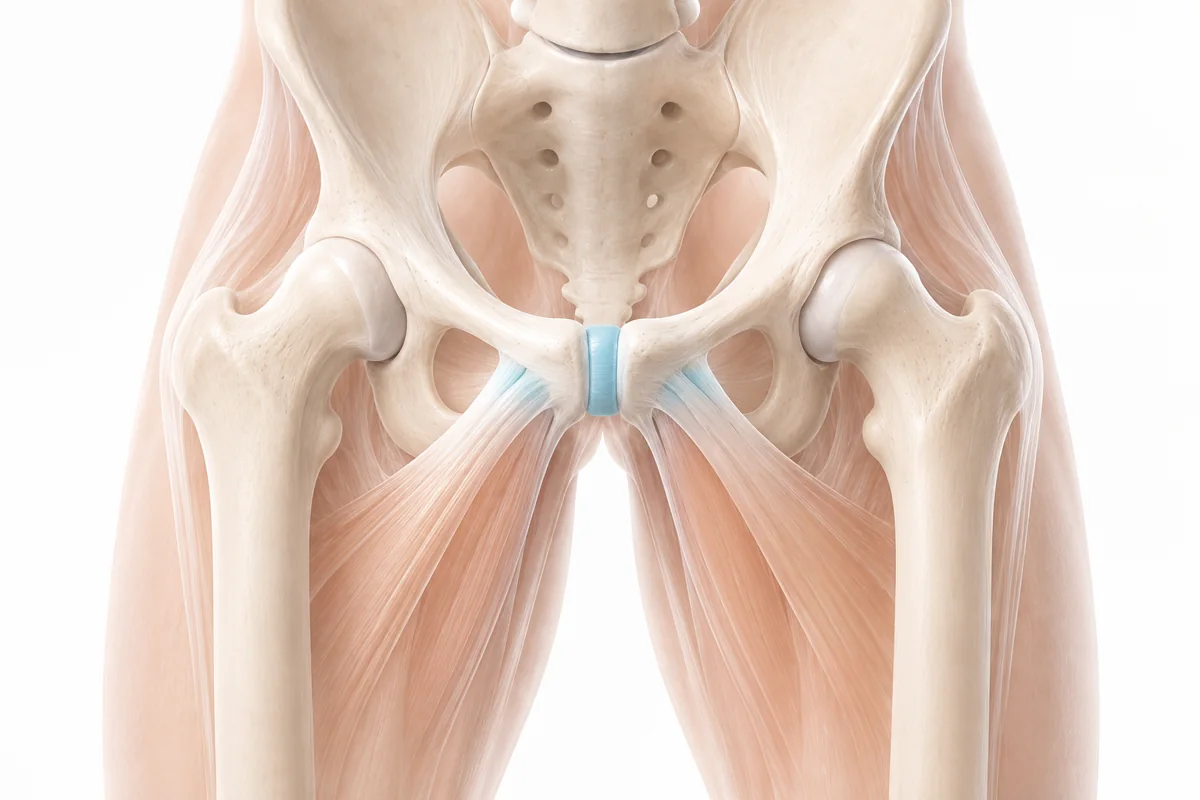
Drag to rotate through 360 degrees. With the model focused, use the arrow keys to rotate and Home to return to the overview. The highlighted area shows relevant anatomy, not a diagnosis or an individual scan.
Osteitis pubis is a term used for pain and stress-related change around the pubic symphysis. In athletes, pubic pain commonly overlaps with adductor-related, inguinal-related or hip-related groin pain, so one scan label may not explain the whole presentation.
Symptoms often develop as running, kicking, change-of-direction, gym or match loads exceed current tolerance. Football codes, soccer and hockey place repeated force through the adductors and the front of the pelvis, but non-sporting causes of groin pain also need consideration.
Pain may be felt close to the pubic bone, along the inner thigh or across both sides. Kicking, sprinting, cutting, getting out of a car or rolling in bed can provoke symptoms.
Squeezing the knees, changing direction or kicking may reproduce pain when the adductor muscles and their attachment are involved.
Players may initially complete sessions but lose kicking distance, acceleration or lateral movement as symptoms build during the week.
These patterns help explain what to look out for. They do not confirm a diagnosis on their own.
Symptoms are often felt centrally at the front of the pelvis or into the nearby groin.
Running, kicking and changes of direction can place repeated demand on the area.
Squeezing the legs or resisted inner-thigh work may provoke symptoms when adductor-related pain overlaps.
Pain may settle with reduced activity and return as field load increases. The overall training pattern needs review.
Groin pain is assessed by clinical pattern rather than applying osteitis pubis to every symptom near the pubic bone.
Palpation and resisted tests can help identify adductor-related, iliopsoas-related, inguinal-related or pubic-related patterns. Hip-related and other causes are also screened.
Hip range, adductor force, trunk capacity and single-leg tasks can reveal limitations relevant to running, kicking and change of direction.
Recent changes in distance, speed, surfaces, kicking volume, match exposure and gym loading are mapped against the symptom timeline.
Severe, atypical or non-mechanical pain, abdominal or urinary symptoms, significant trauma or failure to progress may require medical review or imaging.
Rehabilitation usually needs more than rest from kicking. The plan develops strength while reintroducing the running and change-of-direction forces that caused difficulty.
Running volume and speed can be separated. A player may initially tolerate aerobic running but not acceleration, sprinting or sharp cuts.
Exercises can move from shorter-lever squeezing and controlled strengthening to longer-lever, heavier and faster work as symptoms allow.
Hip extension, rotation, trunk and single-leg strength can be trained where testing shows they limit the athlete’s ability to produce and absorb force.
Short passing, longer kicking, planned direction changes, reactive movement and full team training are separate exposures that can be progressed and monitored.
Book when pubic or inner-groin pain is limiting running, kicking, gym or field training, or when it returns each week as load increases. Sudden severe pain, a groin mass, abdominal or urinary symptoms, or inability to bear weight requires medical assessment.
Book online or call
08 6183 1790
Practical answers about symptoms, assessment and recovery.
No. They can overlap, but pubic-related pain and an acute adductor muscle injury are different clinical patterns. Assessment helps identify which tissues and loads are involved.
Some running may be retained if symptoms remain controlled, but sprinting, kicking or change of direction may need a different dose. Book an assessment to establish the starting level.
Not every case requires imaging. Clinical assessment comes first, with imaging considered when the diagnosis is unclear, symptoms are atypical or results would change management.
A staged return should rebuild adductor strength, running speed, cutting, kicking and team-training exposure. The sequence and criteria depend on the player’s symptoms, role and competition demands.
Book online or call our Cottesloe team.
General educational information; your assessment determines the appropriate care. Supporting reference: Doha agreement on groin pain.
3D bone and tissue source: BodyParts3D, © The Database Center for Life Science, CC BY-SA 2.1 Japan. Meshes cropped and simplified, with illustrative highlights and some simplified soft tissues. Supporting artwork is illustrative and does not represent a scan or confirm a diagnosis. Attribution and licence.