

Pain around the kneecap
Symptoms are often diffuse rather than at one small tendon point. They may warm up during activity, increase with distance or hills, or be more noticeable afterwards.
Assessment and rehabilitation for patellofemoral pain around or behind the kneecap during running, stairs, squats and prolonged sitting.

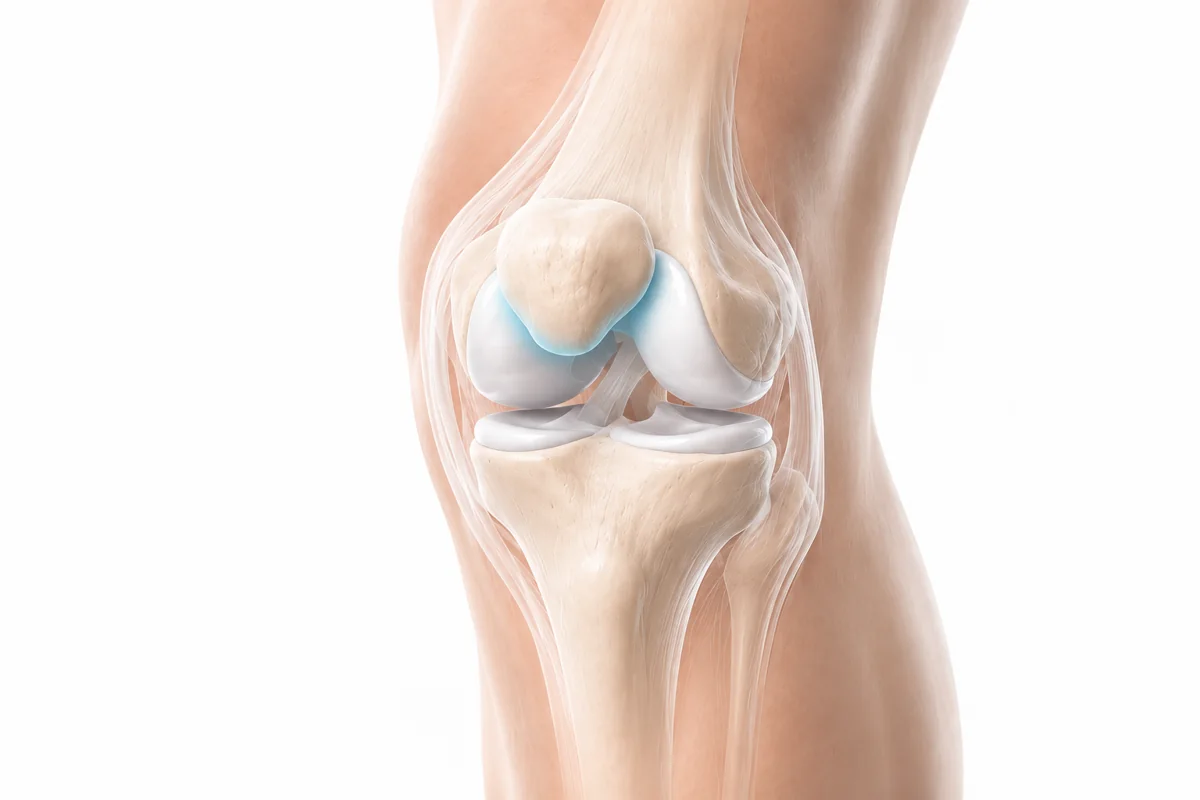
Drag to rotate through 360 degrees. With the model focused, use the arrow keys to rotate and Home to return to the overview. The highlighted area shows relevant anatomy, not a diagnosis or an individual scan.
Runner’s knee commonly refers to patellofemoral pain, felt around or behind the kneecap. Running, stairs, hills, squats, lunges and prolonged sitting can provoke symptoms because they increase load through the patellofemoral joint.
It is rarely explained by a kneecap being permanently out of place. Recent training change, quadriceps and hip capacity, running demands, recovery and individual sensitivity are more useful targets for assessment and rehabilitation.
Symptoms are often diffuse rather than at one small tendon point. They may warm up during activity, increase with distance or hills, or be more noticeable afterwards.
Going downstairs, deep squats and repeated lunges can be provocative because knee load rises with greater flexion and force.
An increase in running distance, speed, hills, sessions per week or lower-body gym work can exceed current capacity even when each activity is normally appropriate.
These patterns help explain what to look out for. They do not confirm a diagnosis on their own.
Patellofemoral pain is commonly felt around or behind the kneecap rather than at one joint-line point.
Stairs, hills, running and repeated knee bends may increase symptoms.
These movements load the knee and help identify the level of activity you currently tolerate.
A bent-knee position held for a long time can become uncomfortable.
Assessment confirms a patellofemoral pattern, rules out other knee conditions and identifies which modifiable factors matter for this runner.
The location, duration, swelling history and response to sitting, stairs, running and gym work help distinguish patellofemoral pain from tendon, meniscus or joint injury.
Single-leg squats, step-downs, hopping or running may be observed to identify painful loads and a practical starting point, not to judge one ideal movement style.
Strength and endurance testing can show whether the knee extensors, hip muscles or calf are prepared for the volume and intensity of current training.
Weekly distance, intensity, hills, surfaces, shoes and recent interruptions are reviewed when they align with symptom onset or persistence.
Effective rehabilitation usually combines education, exercise and a planned running progression rather than relying on passive treatment alone.
Distance, hills, speed or frequency can be changed independently. Some runners tolerate shorter flat runs while strength and knee-load tolerance improve.
Quadriceps and hip exercises are selected at a tolerable knee angle, then progressed in range, resistance and single-leg demand.
Taping, footwear changes or a temporary running cue may reduce symptoms for some runners. They are retained only when they produce a useful change and support ongoing loading.
Later work can include calf and quadriceps endurance, hopping, hills, faster running and the weekly structure needed for the runner’s goal.
Book when kneecap pain is reducing running, affecting stairs or returning with every training increase. Significant swelling, trauma, locking or inability to bear weight needs prompt assessment for another knee injury.
Book online or call
08 6183 1790
Practical answers about symptoms, assessment and recovery.
Often some running can continue if symptoms stay within an agreed response and settle afterwards. The dose may need changes to distance, hills, speed or frequency. Book an assessment for an individual starting point.
Hip strength can be relevant, but it is not the sole cause. Quadriceps capacity, recent load, running demands and other individual findings should also be assessed.
A brace or taping may modify symptoms for some people, but long-term management usually needs progressive exercise and appropriate running load.
Pain around the kneecap with running, stairs or squats fits the pattern, but tendon, meniscus and other problems can overlap. Assessment is appropriate if pain persists, swells or changes how you run.
Book online or call our Cottesloe team.
General educational information; your assessment determines the appropriate care. Supporting reference: AAOS patellofemoral pain information.
3D bone and tissue source: BodyParts3D, © The Database Center for Life Science, CC BY-SA 2.1 Japan. Meshes cropped and simplified, with illustrative highlights and some simplified soft tissues. Supporting artwork is illustrative and does not represent a scan or confirm a diagnosis. Attribution and licence.