

Pain with lifting or reaching
Pain is often felt around the outer upper arm and may increase with overhead work, reaching away from the body, pressing, pulling or lowering a load.
Assessment and rehabilitation for rotator cuff related shoulder pain, weakness and loss of overhead or lifting capacity.

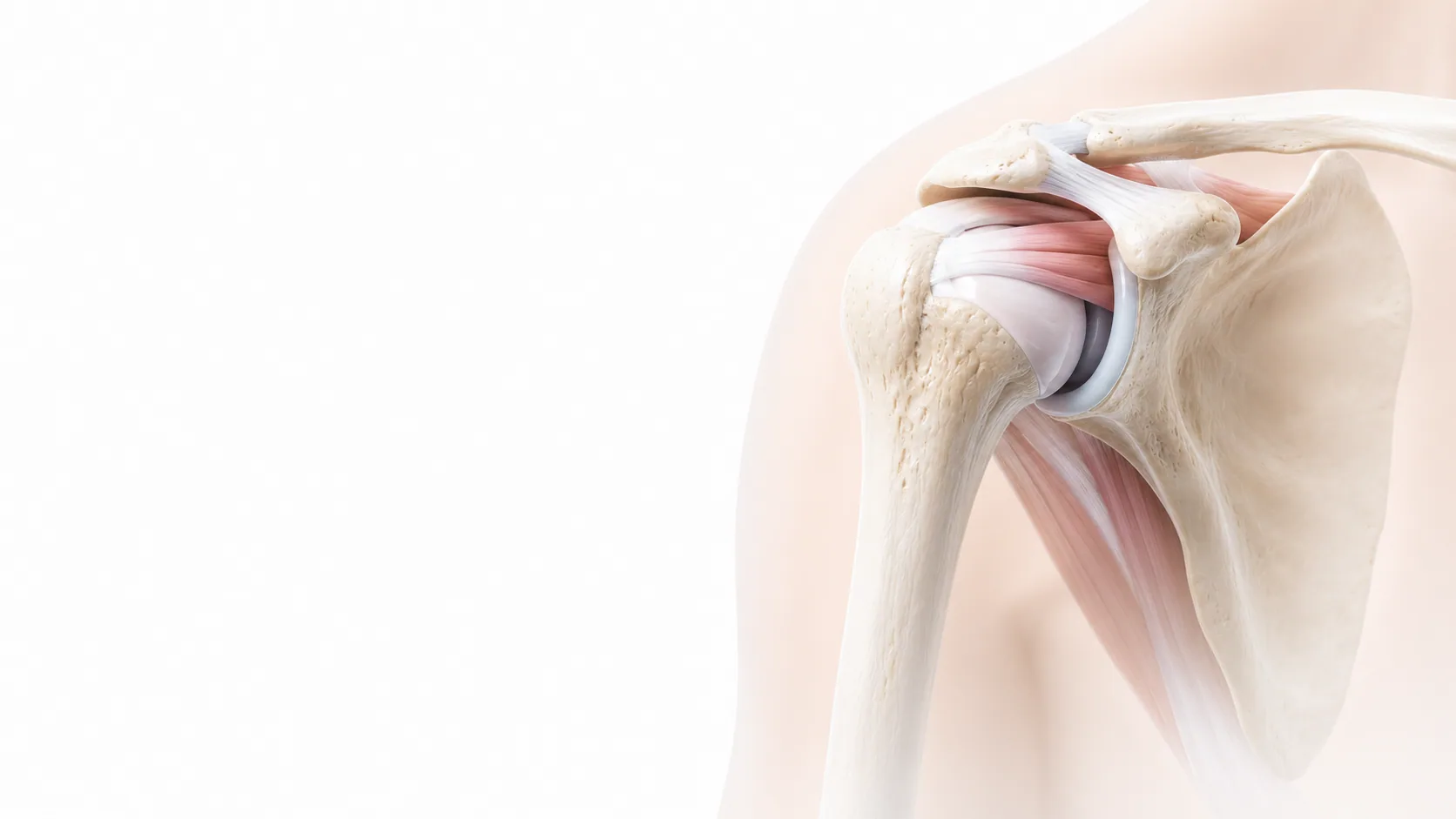
Drag to rotate through 360 degrees. With the model focused, use the arrow keys to rotate and Home to return to the overview. The highlighted area shows relevant anatomy, not a diagnosis or an individual scan.
The rotator cuff is a group of four muscles and their tendons that help centre and move the shoulder. Symptoms can follow a fall or forceful movement, develop as overhead or lifting load increases, or arise alongside age-related tendon change.
A scan may describe tendinopathy or a partial or full-thickness tear, but imaging severity and symptom severity do not always match. The examination considers pain, strength, function, how the problem began and the activities that matter.
Pain is often felt around the outer upper arm and may increase with overhead work, reaching away from the body, pressing, pulling or lowering a load.
Lying on the affected side or settling after a loaded day can be uncomfortable. Night pain is relevant but does not identify the exact tendon or establish whether a tear is present.
Sudden inability to raise the arm after trauma, marked new weakness or a clear loss of function should be assessed promptly, particularly when a significant tear is possible.
These patterns help explain what to look out for. They do not confirm a diagnosis on their own.
Lifting the arm, reaching overhead or lowering an object can provoke shoulder or upper-arm pain.
The arm may feel weaker during rotation, pressing or carrying. A sudden change after injury deserves prompt review.
Lying on the affected shoulder may be uncomfortable and can disturb sleep.
Swimming, throwing or repeated overhead work may expose a loss of endurance even when basic movement is manageable.
No single clinical test proves a rotator cuff diagnosis. A useful assessment combines the history with movement, strength and functional findings, then decides whether imaging or medical review would alter management.
Comparing how far the person can move the arm with how far the joint can be moved helps distinguish pain-limited strength, stiffness and other shoulder patterns.
External rotation, internal rotation, elevation and scapular muscle capacity may be tested in several positions. Pain, force and control all inform exercise selection.
The examination can include the exact reach, press, pull, swim stroke or sporting action that causes difficulty, provided it is safe to reproduce.
Trauma with major weakness, suspected fracture or dislocation, failure to improve, or findings that may change treatment can justify further medical assessment.
Many rotator cuff related presentations are managed with education, activity modification and progressive exercise. Surgery, injection or specialist review may be considered in selected cases, but those decisions depend on the tear, symptoms, function and response to care.
Early changes may reduce repeated painful reaching or heavy work without stopping all shoulder use. The aim is to identify a dose the shoulder can recover from.
Rehabilitation can load rotation, elevation, pressing, pulling and scapular control. Resistance, range and speed are progressed according to symptoms and measured capacity.
Workers, swimmers, throwers and gym athletes need more than comfortable daily movement. Later stages can build sustained overhead work, power, control and repeated efforts.
Changes in strength, range, task tolerance and next-day response help show whether the plan is working and when it needs modification or escalation.
Book when shoulder pain or weakness limits sleep, lifting, work, gym or sport. Arrange prompt assessment after a fall or forceful injury if the arm cannot be raised normally or strength has changed markedly.
Book online or call
08 6183 1790
Practical answers about symptoms, assessment and recovery.
Some rotator cuff tears can be managed successfully without surgery even if the tissue does not return to its previous scan appearance. The decision depends on trauma, tear characteristics, strength, function, goals and response to rehabilitation.
Not necessarily. Exercises, range, load and weekly volume can often be modified while the shoulder is rehabilitated. Book an assessment if strength is falling or repeated modifications are not settling the problem.
No. Night pain occurs in several shoulder presentations and does not confirm a tear. History, examination and, when clinically useful, imaging provide a clearer picture.
Timeframes vary with irritability, duration, tear status, strength loss and required activity. Progress is better guided by changes in capacity and function than by a fixed number of weeks.
Book online or call our Cottesloe team.
General educational information; your assessment determines the appropriate care. Supporting reference: AAOS shoulder information.
3D bone and tissue source: BodyParts3D, © The Database Center for Life Science, CC BY-SA 2.1 Japan. Meshes cropped and simplified, with illustrative highlights and some simplified soft tissues. Supporting artwork is illustrative and does not represent a scan or confirm a diagnosis. Attribution and licence.