

First-step pain
The first few steps in the morning may be sharp or stiff, ease after moving and return after prolonged standing or higher activity.
Assessment and rehabilitation for plantar heel pain, including first-step pain, walking and running load, calf capacity and foot function.

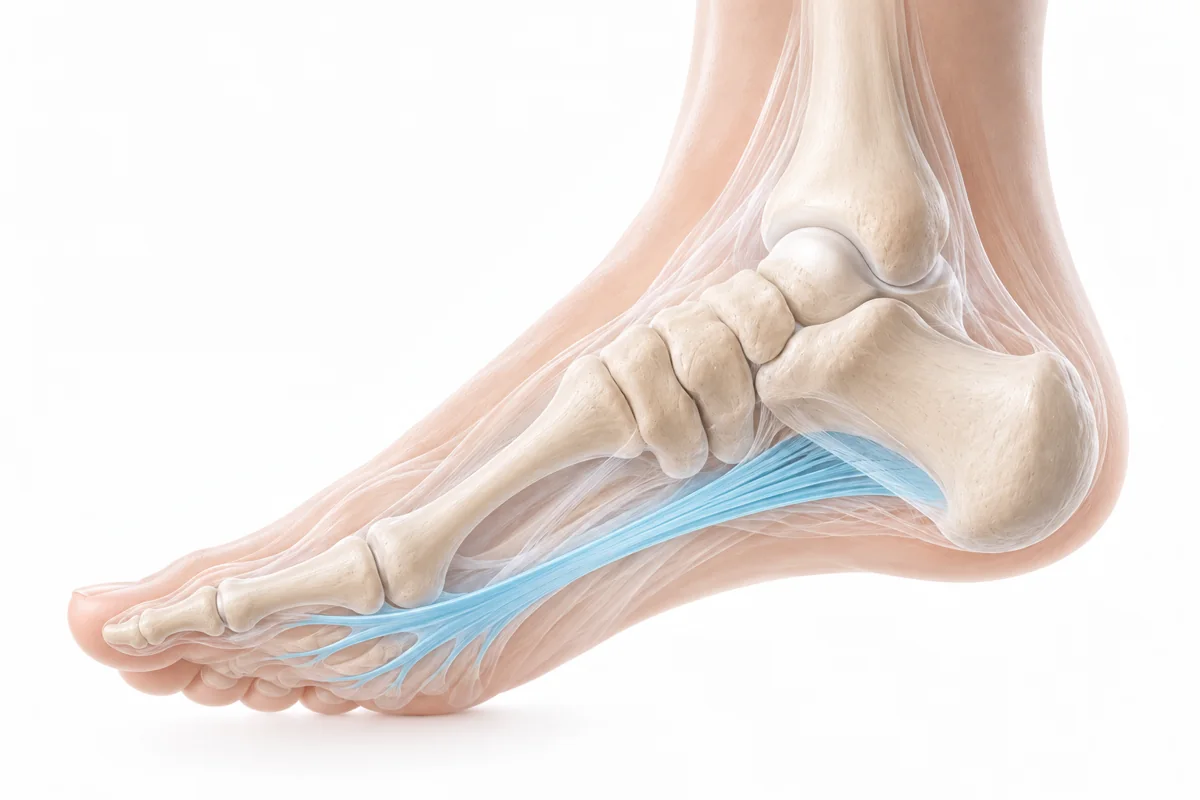
Drag to rotate through 360 degrees. With the model focused, use the arrow keys to rotate and Home to return to the overview. The highlighted area shows relevant anatomy, not a diagnosis or an individual scan.
Plantar fasciitis, also called plantar fasciopathy, is a common cause of pain under the heel where the plantar fascia attaches. Symptoms often build with standing, walking or running load rather than following one clear incident.
First-step pain after sleep or sitting is characteristic, but not every painful heel is plantar fascia pain. Heel-pad irritation, nerve symptoms, Achilles insertion pain and bone stress can require a different pathway.
The first few steps in the morning may be sharp or stiff, ease after moving and return after prolonged standing or higher activity.
Tenderness commonly sits near the inner underside of the heel and may increase when the toes are extended or the fascia is loaded.
Work hours on the feet, a change in daily steps, running volume, hills or footwear can alter the cumulative load through the heel.
These patterns help explain what to look out for. They do not confirm a diagnosis on their own.
Pain under the heel can be strongest on the first steps after sleep or sitting.
Prolonged standing, walking or increased running can aggravate the area.
The painful spot is often near the plantar fascia attachment, but other heel problems can feel similar.
Symptoms may ease as you get moving and return with more loading. Persistent or unusual pain needs review.
Assessment tests whether the plantar fascia pattern fits and screens other sources of heel pain that need different management.
The first-step response, standing tolerance and exact tender area help separate plantar fascia pain from Achilles, fat-pad or nerve-related presentations.
Ankle movement and calf raise strength are assessed because they influence walking and running demands through the foot and heel.
Single-leg balance, toe strength, walking and, when relevant, running can show how the foot manages load. Foot shape alone does not determine treatment.
More constant pain, marked bone tenderness, swelling, recent load spike or difficulty bearing weight can raise concern for a calcaneal stress injury and require medical investigation.
Management combines a tolerable daily load with progressive exercise. Short-term symptom tools can be useful when they help the person remain active and complete rehabilitation.
Daily steps, long standing periods and running can be modified separately. The goal is to avoid repeated flare-ups without assuming all weight bearing must stop.
Calf raises and foot-strength exercises can progress in range and resistance. A toe-elevated heel raise may be added when the fascia tolerates it.
Plantar fascia-specific and calf stretching can help some presentations, especially when movement is limited, but should not replace strengthening and load progression.
Taping, footwear changes or orthoses may provide short-term symptom relief for selected people. Their value is judged by a measurable change in walking or activity tolerance.
Book when first-step pain persists, walking or running is being reduced, or heel symptoms are worsening despite footwear and activity changes. Constant pain, swelling, severe bone tenderness or inability to bear weight needs prompt assessment.
Book online or call
08 6183 1790
Practical answers about symptoms, assessment and recovery.
Not necessarily. Heel spurs can be present without pain and do not by themselves prove the cause. The symptom pattern and examination are more important for planning care.
Usually the aim is to find a tolerable walking dose rather than stop completely. Work and daily-step demands may need temporary adjustment while calf and foot capacity improve.
Orthoses may reduce symptoms for some people, particularly as part of a broader plan, but they do not replace progressive loading and activity management.
Book when pain persists or limits normal walking, work or running. Seek prompt assessment for constant pain, swelling, marked bone tenderness or difficulty bearing weight.
Book online or call our Cottesloe team.
General educational information; your assessment determines the appropriate care. Supporting reference: NHS plantar fasciitis information.
3D bone and tissue source: BodyParts3D, © The Database Center for Life Science, CC BY-SA 2.1 Japan. Meshes cropped and simplified, with illustrative highlights and some simplified soft tissues. Supporting artwork is illustrative and does not represent a scan or confirm a diagnosis. Attribution and licence.