

Pain below the buttock
Symptoms can extend into the thigh, calf or foot and may change with sitting, bending, lifting, coughing or particular spinal positions. The distribution varies with the irritated structure and the individual presentation.
Assessment for leg pain, pins and needles, numbness or weakness that may be related to irritation of a nerve in the lower back.

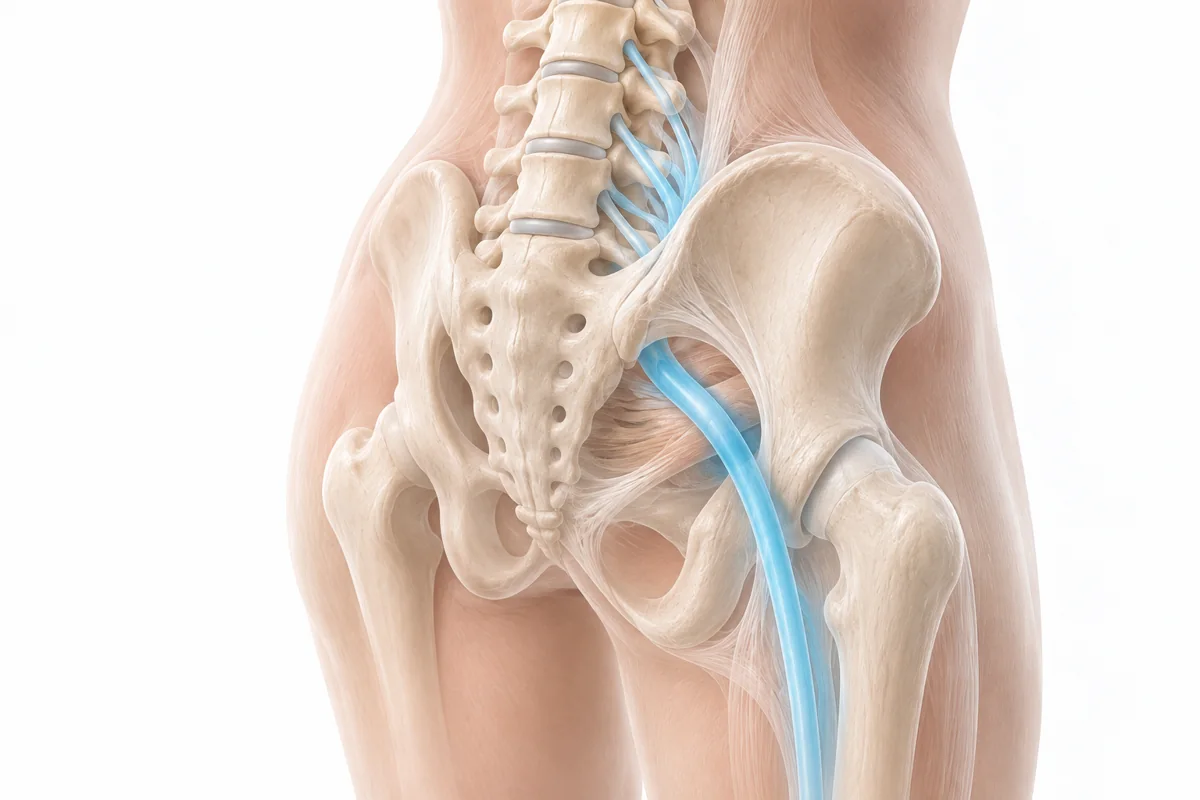
Drag to rotate through 360 degrees. With the model focused, use the arrow keys to rotate and Home to return to the overview. The highlighted area shows relevant anatomy, not a diagnosis or an individual scan.
Sciatica describes symptoms associated with irritation or reduced function of a nerve root in the lower back. Pain may travel through the buttock and down the leg, but nerve-related symptoms can also include tingling, numbness, altered sensation or weakness.
Not every pain that travels into the leg is sciatica. Hip, joint, muscle and other lower-back presentations can produce referred pain without neurological change, so the symptom map alone does not confirm the diagnosis.
Symptoms can extend into the thigh, calf or foot and may change with sitting, bending, lifting, coughing or particular spinal positions. The distribution varies with the irritated structure and the individual presentation.
Altered sensation can support a nerve-related presentation, particularly when it follows a recognisable area of the leg or foot. The examination checks whether this matches other neurological findings.
Difficulty lifting the foot, rising onto the toes or producing strength through part of the leg needs proper assessment. Progressive weakness requires prompt medical review.
These patterns help explain what to look out for. They do not confirm a diagnosis on their own.
A sharp, burning or shooting pain can travel from the buttock into the leg, sometimes reaching the foot or toes.
Tingling or altered sensation may follow the leg symptoms. The distribution helps guide a neurological examination.
Reduced feeling or a change in strength needs assessment. Rapidly worsening weakness requires prompt medical review.
Sitting, bending or certain movements may change symptoms. The pattern matters more than assuming every leg pain is sciatica.
The assessment aims to establish whether symptoms are likely to be nerve-related, how irritable they are and whether any features require medical investigation.
The physio will ask where symptoms travel, what positions change them, whether coughing or sneezing matters, and how sitting, walking, sleep and activity are affected.
Sensation, reflexes and muscle strength may be checked to look for changes associated with a nerve root. Findings are interpreted together rather than from one test.
Leg-position tests may reproduce or alter neural symptoms. These tests help assess mechanosensitivity but do not identify the cause in isolation.
Spinal movement, hip movement, walking and relevant work or gym tasks can show which directions and loads are currently tolerated.
Treatment is matched to the level of irritation and neurological findings. The plan may start with positions and activity doses that reduce aggravation, then progress toward the work, lifting, running or sport the person needs.
Complete bed rest is rarely the goal. Walking, changing position and selected daily activity can be adjusted to avoid repeated flare-ups while preserving confidence and function.
Some people have a direction of spinal movement that reduces or centralises leg symptoms. When present, it can guide early exercise, but it is not assumed for every case.
Exercise can progress toward bending, lifting, carrying, running or gym work once symptoms and strength allow. The relevant dose depends on what the person is returning to.
Worsening neurological loss, severe unremitting symptoms or poor progress may require GP, specialist or imaging input. Imaging is considered in context because scan findings alone do not explain every symptom.
Book an appointment when pain travels into the leg, pins and needles or numbness persists, strength feels different, or symptoms are limiting sleep, work, walking or exercise. New bladder or bowel changes, numbness around the saddle region, rapidly worsening weakness or major trauma require urgent medical assessment.
Book online or call
08 6183 1790
Practical answers about symptoms, assessment and recovery.
No. Leg pain can be referred from the back, hip or other tissues without nerve-root involvement. A neurological and movement examination helps distinguish the likely pattern.
Appropriate activity is often retained, but the type and dose should match symptom irritability and any neurological findings. Book an assessment if exercise repeatedly drives symptoms further down the leg or causes increasing numbness or weakness.
Not automatically. Imaging may be considered when findings could change management, symptoms are severe or persistent, or significant neurological signs are present. An assessment can help identify the appropriate pathway.
Seek urgent medical care for new bladder or bowel dysfunction, numbness around the saddle area, rapidly progressive leg weakness, severe symptoms in both legs or symptoms after significant trauma.
Book online or call our Cottesloe team.
General educational information; your assessment determines the appropriate care. Supporting reference: NHS sciatica information.
3D bone and tissue source: BodyParts3D, © The Database Center for Life Science, CC BY-SA 2.1 Japan. Meshes cropped and simplified, with illustrative highlights and some simplified soft tissues. Supporting artwork is illustrative and does not represent a scan or confirm a diagnosis. Attribution and licence.