

Traumatic knee injuries
A pop, rapid swelling, giving way, inability to continue or loss of movement after a twist or contact event can indicate a more significant injury and should be assessed.
Assessment and rehabilitation for knee pain affecting walking, stairs, squatting, running, jumping, gym or field and court sport.

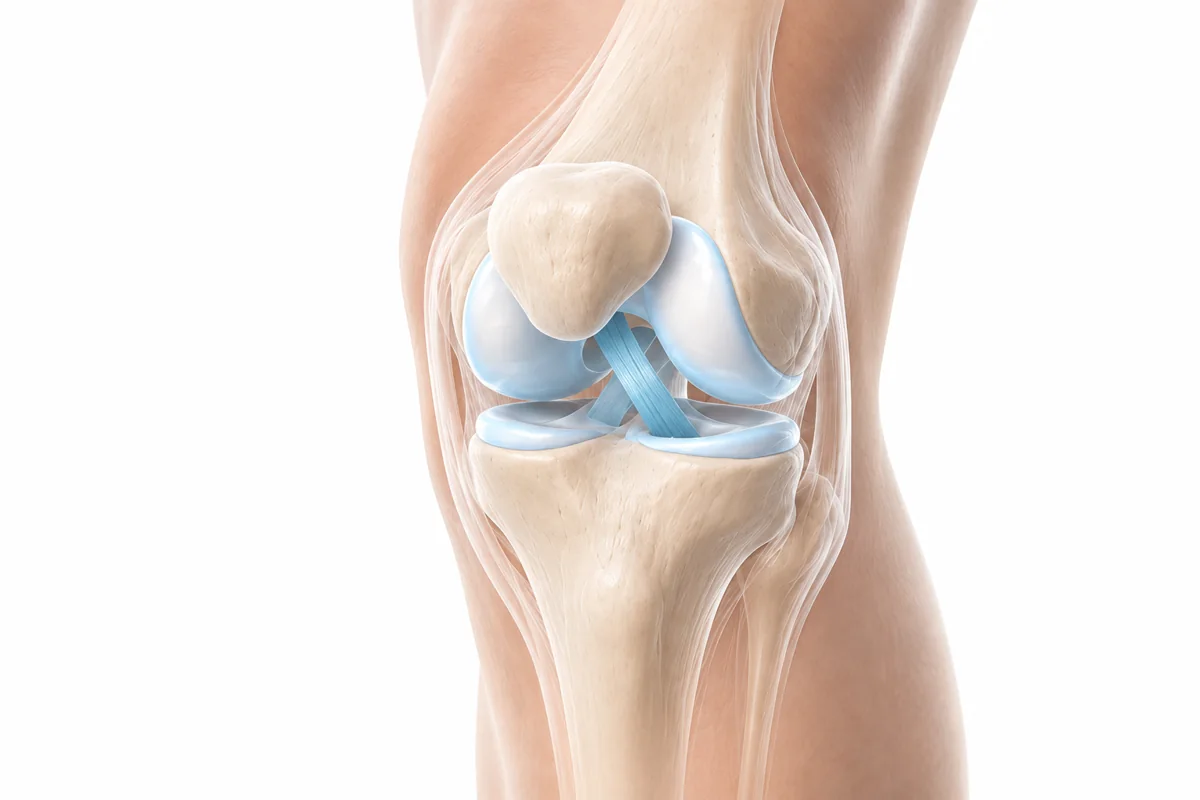
Drag to rotate through 360 degrees. With the model focused, use the arrow keys to rotate and Home to return to the overview. The highlighted area shows relevant anatomy, not a diagnosis or an individual scan.
Knee pain can follow a twist, tackle or landing, or develop gradually with running, jumping, squatting or increased training. Pain at the front of the knee differs from joint-line pain, tendon pain, marked swelling or instability, and each pattern changes what should be examined.
The knee contains ligaments, menisci, cartilage, tendons and the patellofemoral joint. A broad knee page helps when the diagnosis is unclear, while specific ACL, meniscus and runner’s knee pages provide deeper condition information.
A pop, rapid swelling, giving way, inability to continue or loss of movement after a twist or contact event can indicate a more significant injury and should be assessed.
Pain during stairs, squats, running or jumping may relate to the patellofemoral joint, tendon or another load-sensitive structure rather than one sudden tear.
Front-of-knee pain, joint-line pain, pain behind the knee and focal tendon pain suggest different examination priorities. True locking, where the knee physically cannot straighten, is different from stiffness or a painful hesitation.
These patterns help explain what to look out for. They do not confirm a diagnosis on their own.
Running, stairs, squats or jumping may bring on pain around the kneecap or nearby tendon.
Pain along the inner or outer joint line can follow a twist or develop gradually and needs examination.
A swollen knee may lose bending or straightening. The timing and degree of swelling are useful clues.
A knee that catches, cannot straighten or feels unstable needs assessment before return to demanding activity.
The assessment combines the injury or load history with swelling, joint motion, specific tissue tests, strength and the tasks that reproduce symptoms.
Swelling that appears rapidly after a twist or impact raises different concerns from swelling that builds later with activity. The amount of swelling, ability to straighten or bend the knee and pain during weight bearing help determine immediate priorities.
When indicated, the physio can assess ligament stability, joint-line tenderness and meniscal signs, interpreted as part of the whole clinical picture.
Pain during squatting, stairs, running, jumping or prolonged sitting can be examined with relevant knee, hip and ankle capacity.
Quadriceps, hamstring, calf and hip strength may be tested alongside walking, squatting, hopping, landing or change of direction when appropriate.
Knee rehabilitation is not one set of exercises. A traumatic ligament injury, acute meniscus presentation and gradual patellofemoral pain require different early decisions and progressions.
Early care may focus on swelling, movement, walking and clear referral or imaging decisions before heavier loading begins.
Quadriceps, hamstring, calf and hip loading can be progressed according to the diagnosis and current tolerance.
Hopping, landing, running speed and change of direction can be added when they are relevant to the person’s goal.
Symptoms, swelling, movement, strength and functional performance can guide progression rather than relying on time alone.
Book an assessment when swelling, pain, instability, locking or loss of function follows an injury, or when gradual knee pain keeps returning as activity increases.
Book online or call
08 6183 1790
Practical answers about symptoms, assessment and recovery.
Possible sources include ligament injury, meniscus injury, patellofemoral pain, tendon problems, osteoarthritis and other joint or referred conditions. The onset, location, swelling and functional pattern help narrow the possibilities.
Yes when swelling follows trauma, develops rapidly, restricts movement or persists. Marked inability to bear weight, deformity or severe trauma requires prompt medical assessment.
Often some exercise remains appropriate, but the load, range and task may need adjustment. Assessment can identify which activities to retain and how to rebuild the aggravating demand.
Not every knee presentation needs MRI. Imaging is considered when clinical findings, trauma, mechanical symptoms or failure to progress make the result likely to change management.
Book online or call our Cottesloe team.
General educational information; your assessment determines the appropriate care. Supporting reference: NHS knee pain information.
3D bone and tissue source: BodyParts3D, © The Database Center for Life Science, CC BY-SA 2.1 Japan. Meshes cropped and simplified, with illustrative highlights and some simplified soft tissues. Supporting artwork is illustrative and does not represent a scan or confirm a diagnosis. Attribution and licence.