

Traumatic dislocation
A first dislocation may involve bone, labrum, ligament, rotator cuff or nerve injury. It requires appropriate medical assessment and reduction rather than attempting to force the joint back without training.
Assessment and rehabilitation after shoulder dislocation, subluxation or repeated episodes of the shoulder feeling loose, unreliable or ready to slip.

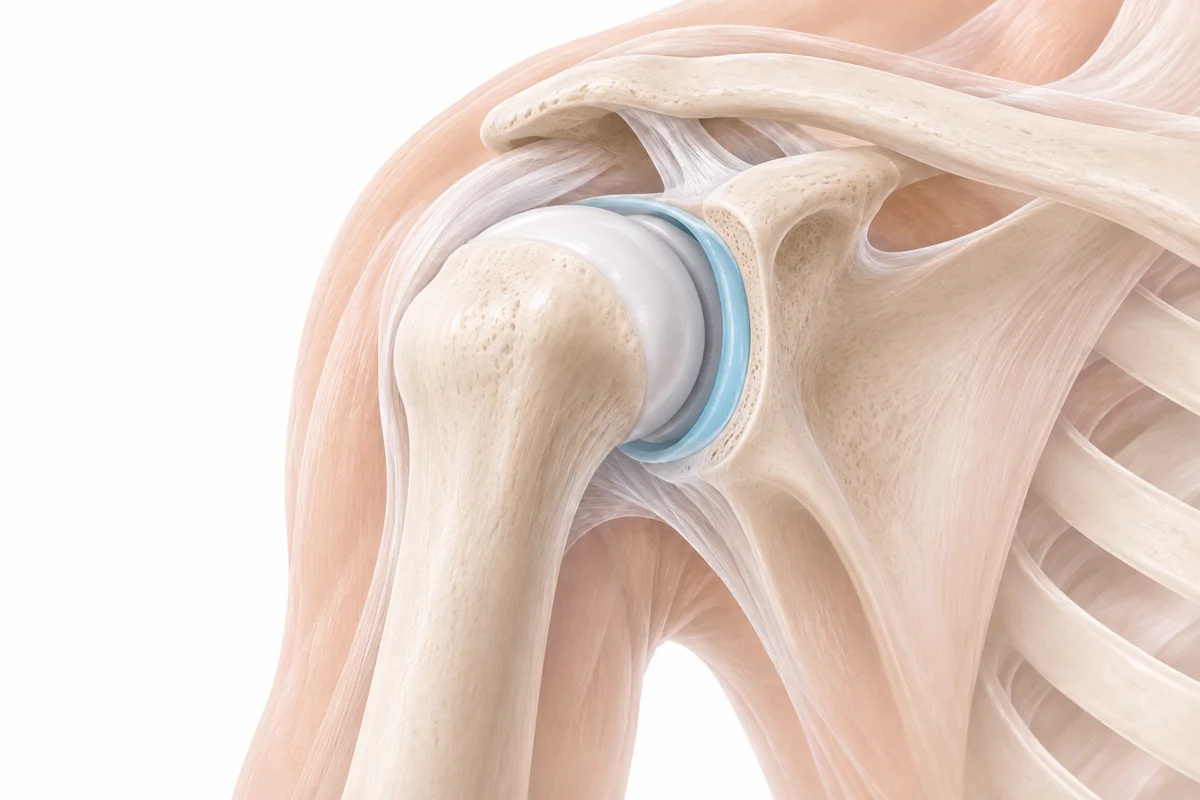
Drag to rotate through 360 degrees. With the model focused, use the arrow keys to rotate and Home to return to the overview. The highlighted area shows relevant anatomy, not a diagnosis or an individual scan.
Shoulder instability occurs when the ball of the shoulder moves excessively relative to the socket. A dislocation is a complete loss of joint position, while a subluxation is a partial slip that may reduce on its own. Instability can follow trauma or develop with repeated overhead movement and ligament laxity.
The direction and cause matter. A tackle with the arm forced back, a fall onto an outstretched arm and a swimmer with multidirectional looseness are different presentations with different rehabilitation and referral decisions.
A first dislocation may involve bone, labrum, ligament, rotator cuff or nerve injury. It requires appropriate medical assessment and reduction rather than attempting to force the joint back without training.
Repeated slipping, dead-arm sensations or apprehension in particular positions can persist even when day-to-day movement is comfortable.
Contact athletes need tolerance to collision and vulnerable arm positions. Throwers, swimmers and lifters need control under speed, fatigue and repeated overhead load.
These patterns help explain what to look out for. They do not confirm a diagnosis on their own.
The shoulder may feel as though it shifts out of place during activity or in certain arm positions.
You may avoid reaching back, throwing or contact because the shoulder feels unreliable.
A slip or dislocation can be followed by pain and reduced movement. A suspected dislocation needs urgent medical care.
Recurring instability can follow an earlier injury or occur with joint laxity. The cause changes the rehabilitation plan.
Assessment establishes what happened, whether the joint and nerves are currently safe, and which positions or loads cause apprehension.
The physio will ask about the direction of force, whether reduction was needed, the number of episodes and symptoms such as numbness, weakness, catching or locking.
Range is assessed carefully, particularly after recent trauma. Apprehension is different from pain and can indicate that the person does not trust a position even before symptoms develop.
Direction-specific shoulder strength, endurance and control are tested in safe positions, then progressed toward the ranges required for work or sport.
First-time traumatic dislocation, associated fracture, nerve symptoms, major cuff weakness or repeated instability may require imaging and specialist input alongside rehabilitation.
Rehabilitation develops strength and control through increasingly demanding positions. The pathway depends on tissue injury, medical advice, recurrence history and the activity being restored.
After an acute episode, movement is restored within the precautions appropriate to the injury. Unnecessary long-term guarding can create stiffness and loss of capacity.
Rotator cuff, scapular and whole-arm exercises progress from controlled positions to greater range, load and speed. The goal is responsive control, not simply holding a static posture.
Overhead, externally rotated or contact positions are introduced gradually so confidence and control are tested before unrestricted exposure.
Later work may include catching, throwing, pressing, falling, wrestling, tackle preparation or reactive tasks, selected for the athlete’s sport and position.
Book after a shoulder has dislocated or slipped, when apprehension limits gym or sport, or when episodes are recurring. A shoulder that appears out of joint, has altered circulation or sensation, or follows major trauma requires urgent medical care.
Book online or call
08 6183 1790
Practical answers about symptoms, assessment and recovery.
Yes, after the joint has been medically assessed and reduced. Physiotherapy can examine movement, strength, apprehension and the staged return to function, while coordinating any imaging or specialist advice.
Some presentations respond well to rehabilitation, while recurrent traumatic instability or associated structural injury may lead to a surgical opinion. Age, sport, recurrence, tissue injury and goals all influence the decision.
Return should consider pain, movement, strength, confidence, vulnerable-position control and graded contact exposure. A date alone does not establish readiness.
Instability can present as apprehension, slipping or loss of control without a full dislocation. Book an assessment to distinguish instability from pain-related weakness or another shoulder condition.
Book online or call our Cottesloe team.
General educational information; your assessment determines the appropriate care. Supporting reference: AAOS shoulder instability information.
3D bone and tissue source: BodyParts3D, © The Database Center for Life Science, CC BY-SA 2.1 Japan. Meshes cropped and simplified, with illustrative highlights and some simplified soft tissues. Supporting artwork is illustrative and does not represent a scan or confirm a diagnosis. Attribution and licence.