

Walking does not rule it out
Comfortable walking places different demands on the knee from cutting, landing or pivoting. It does not establish whether the knee is ready for sport.
Clear information about ACL injuries, clinical assessment and the different treatment pathways that may follow.

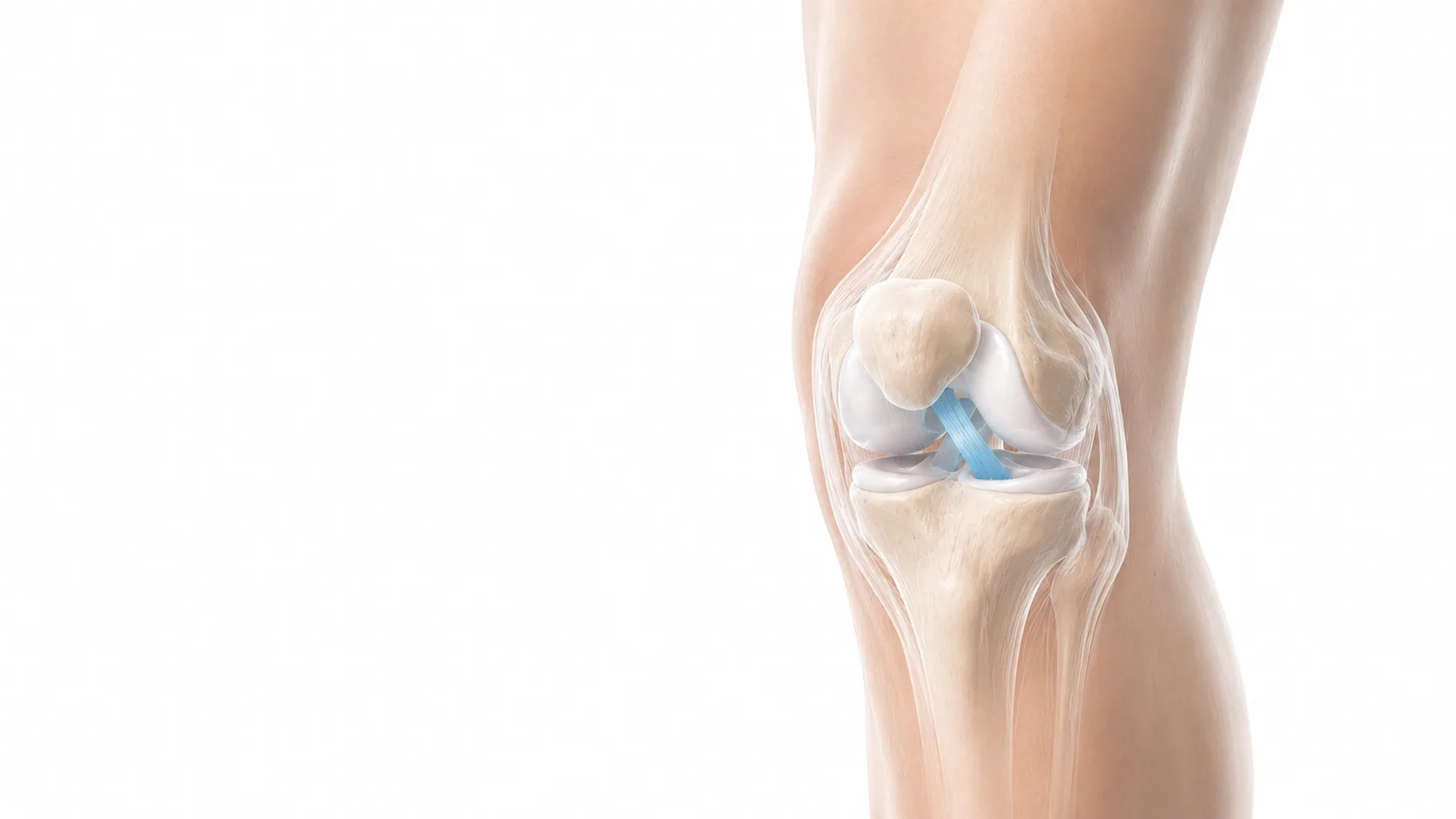
Drag to rotate through 360 degrees. With the model focused, use the arrow keys to rotate and Home to return to the overview. The highlighted area shows relevant anatomy, not a diagnosis or an individual scan.
The anterior cruciate ligament connects your thighbone to your shinbone. It helps control forward movement and rotation inside the knee. An ACL injury is a partial tear or complete rupture of this ligament.
A planted foot with a sudden turn, awkward landing or rapid stop can cause it. A tackle or collision can also be involved. Meniscus, cartilage or other ligament damage may happen at the same time.
Comfortable walking places different demands on the knee from cutting, landing or pivoting. It does not establish whether the knee is ready for sport.
Pain, swelling, stability, associated injury and your activity goals all help determine the treatment pathway.
These patterns help explain what to look out for. They do not confirm a diagnosis on their own.
A twist, landing or change of direction may cause a pop. Some people cannot continue playing; others can still walk.
The knee may swell quickly and feel tight, painful or difficult to bend and straighten.
Turning, landing or uneven ground may feel unreliable, even after the initial pain settles.
Persistent difficulty straightening, joint-line pain or true locking needs assessment for associated injury.
Your injury history and examination help establish what has happened and whether imaging or medical review would help.
The movement, any contact, a pop, how quickly swelling appeared and whether you could continue playing help establish the injury pattern.
We assess swelling, bending, straightening and muscle control. Appropriate ligament tests, such as the Lachman test, help assess ACL function.
Joint-line pain, locking or other ligament findings can change the plan. The meniscus and cartilage also need consideration.
An MRI can clarify ligament damage and associated injury. It is not required in every case before assessment. An X-ray may be needed if a fracture is suspected.
Rehabilitation matters with or without reconstruction. Repeated instability, associated injuries and your work or sport goals help guide the decision.
Rehabilitation without surgery can build functional stability. A surgical opinion may be appropriate for an unreliable knee or demanding pivoting sport; surgery still requires a substantial rehabilitation program.
Restore comfortable walking, knee straightening and thigh-muscle activation. Swelling and the response to movement guide the starting load.
Progressive strength and balance work builds capacity for daily activity and exercise. Repeated giving way or swelling is a reason to review the plan.
Running and jumping add demands that walking cannot test. Strength, movement quality, knee response and any surgical restrictions guide progression.
Changing direction, reacting, contact and fatigue need gradual exposure. Testing, confidence and progressive training inform the return-to-sport decision.
Bring any scan reports, earlier knee history and the questions you want answered. Explain which activities feel unstable, as well as where the knee hurts.
Book online or call
08 6183 1790
Practical answers about symptoms, assessment and recovery.
People often use “ACL strain” to describe this injury, but a ligament injury is technically a sprain. It can range from stretched fibres to a partial tear or complete rupture. The label alone does not tell you how stable the knee is or which treatment you need.
Yes. Some people regain comfortable walking even with a complete tear. Walking mainly in a straight line places different demands on the knee from pivoting, cutting or landing. Being able to walk does not rule out an ACL injury or establish readiness for sport.
No. Rehabilitation-led care and reconstruction followed by rehabilitation are both treatment pathways. Ongoing instability, associated injury, your work and sport demands, age and skeletal maturity all matter. Discuss the options with your physiotherapist and orthopaedic specialist rather than deciding from a scan report alone.
Healing is possible in some ACL injuries, but it varies and cannot be promised. A scan showing continuity does not by itself establish whether the knee is stable enough for your activity. Symptoms, clinical stability and functional progress need to be reviewed together.
Recovery is usually measured in months and varies with the injury, treatment pathway and activity you want to regain. Returning to pivoting sport after reconstruction commonly takes around 9–12 months or longer. Time alone is not clearance: strength, function, knee response, confidence and the treating team’s assessment remain important.
Usually you can arrange an assessment first and bring any reports you already have. The injury history and examination help determine whether imaging or medical review is needed. Seek prompt medical assessment for a locked knee, severe swelling or inability to bear weight after an injury.
Book online or call our Cottesloe team.
General educational information; your assessment determines the appropriate care. Supporting reference: AAOS ACL information.
3D bone and tissue source: BodyParts3D, © The Database Center for Life Science, CC BY-SA 2.1 Japan. Meshes cropped and simplified, with illustrative highlights and some simplified soft tissues. Supporting artwork is illustrative and does not represent a scan or confirm a diagnosis. Attribution and licence.