

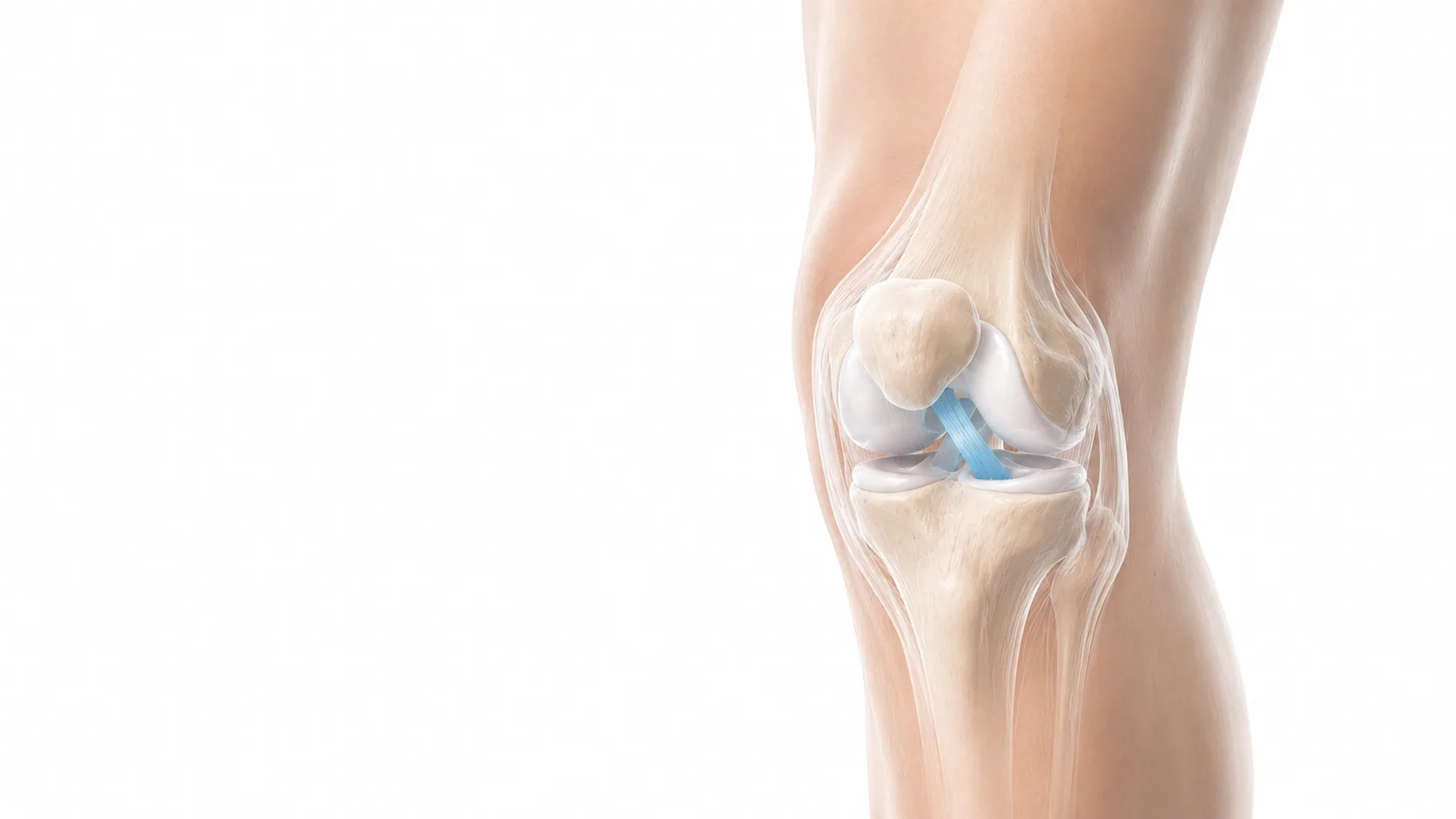
What to do after a suspected ACL injury
An ACL injury often occurs during a sudden change of direction, pivot or awkward landing. Some people hear or feel a pop, develop swelling over the next several hours and find that the knee gives way. Others can still walk, so walking alone does not rule the injury out.
Early priorities are to protect the knee from repeated giving way, restore comfortable extension, manage swelling and arrange assessment. Crutches may be useful when walking is substantially altered, but the appropriate support depends on the wider injury pattern.
Record the mechanism
Note the movement, contact, pop, immediate pain, ability to continue and timing of swelling. These details help distinguish ACL injury from meniscus, collateral-ligament and patellar injury.
Avoid repeated instability
Do not repeatedly test cutting or pivoting to see whether the knee gives way. Maintain only the activity the knee can complete safely until it is examined.
Seek prompt care for severe features
A locked knee, major deformity, inability to bear weight, altered circulation or sensation, or escalating calf symptoms requires prompt medical assessment.
This guide provides general information and does not diagnose an individual knee injury.
How an ACL injury is examined
Clinical assessment combines the mechanism and swelling history with knee movement, joint stability and screening of structures commonly injured at the same time. Lachman, anterior-drawer and pivot-shift tests have different roles and can be affected by swelling, guarding and timing.
MRI can confirm ACL and associated injury when the result will guide management. It does not replace examination or decide surgery by itself. Meniscus damage, collateral-ligament injury, cartilage injury, bone bruising and the person’s functional instability all contribute to the treatment plan.
Knee extension and swelling
Loss of full extension and a persistently reactive joint affect walking, quadriceps function and readiness for later loading.
Quadriceps control
The ability to contract the quadriceps, perform a straight-leg raise and control weight bearing provides an early rehabilitation baseline.
Associated injury
Joint-line pain, locking, medial or lateral ligament tenderness and other findings can change imaging, surgical and early weight-bearing decisions.
ACL treatment is not decided by age or sport alone
ACL reconstruction and non-operative management are both valid pathways for selected people. The decision considers repeated instability, associated injuries, the desired sport or occupation, willingness to complete rehabilitation, knee response and discussion with the relevant clinicians.
A period of structured rehabilitation can be useful before either pathway. Before surgery, the goals commonly include settling swelling, restoring extension and flexion, normalising walking and rebuilding quadriceps control. For a non-operative pathway, rehabilitation also tests whether the knee can regain the stability and capacity required for the person’s goals.
When surgery may be discussed
Repeated giving way, high-demand pivoting goals and repairable associated injury may contribute to an orthopaedic recommendation. The graft choice and procedure then shape rehabilitation.
When non-operative care may be considered
Some people can regain stable function through rehabilitation and activity decisions without reconstruction. Progress still requires structured strength, running and task exposure.
Shared decision-making
The person, physiotherapist and surgeon can consider risks, benefits, uncertainty and goals together. No pathway guarantees return to sport or prevents future injury.
Rebuild the knee from strength to full training
ACL rehabilitation progresses through overlapping stages. Early work restores knee function and quadriceps control. Later work develops heavier strength, running, jumping, deceleration and direction change before unrestricted training is considered.
Time from injury or surgery remains relevant to healing and risk, but it should not be the only return-to-sport measure. Strength, hop performance, movement quality, knee response, confidence, sport-specific capacity and tolerance of a full training progression need to be considered together.
Restore a quiet, functional knee
Full extension, improving flexion, controlled swelling and confident walking are early markers before higher loading.
Build measurable force
Quadriceps, hamstring, calf and hip strength are progressed and compared with useful baselines rather than judged by exercise completion alone.
Earn running and jumping
The knee needs enough strength, control and impact tolerance for repeated loading before running and plyometrics are advanced.
Complete the sport bridge
Acceleration, braking, planned and reactive cutting, skills under fatigue and team-training exposure close the gap between testing and competition.